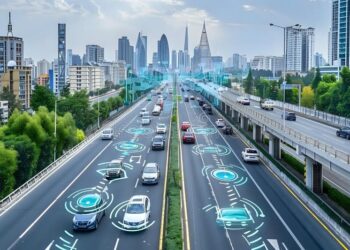

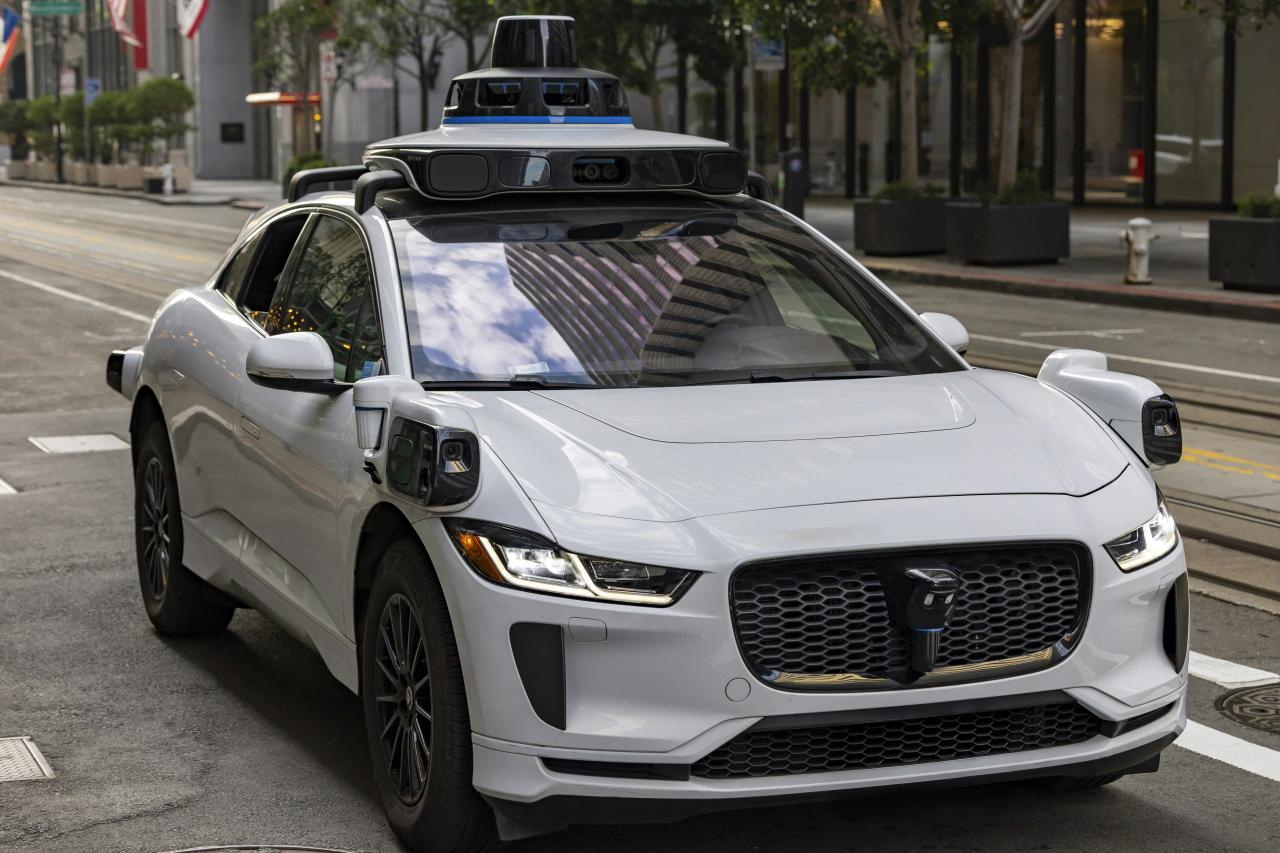
The evolution of the modern automobile has transitioned from mechanical engineering to a complex symphony of digital intelligence and sensory perception. At the heart of this revolution lies the concept of sensor integration, a process that allows a vehicle to perceive its surroundings with greater accuracy than any human driver. For a car to drive itself, it must not only “see” objects but also understand their distance, velocity, and potential trajectory in real-time. This requires a sophisticated architecture where multiple types of sensors—ranging from light-based detection to radio waves—work in perfect harmony. The challenge for engineers is no longer just about building a better camera; it is about how to fuse different data streams into a single, cohesive world model.
As we move toward higher levels of automation, the reliability of these integration systems becomes the primary factor in passenger safety and public trust. High-value automotive technology is currently focused on reducing latency and increasing the resolution of these integrated “eyes.” Understanding the underlying hardware and the software that binds it together is essential for anyone following the future of mobility. This deep dive will explore the specific technologies that make autonomous navigation possible and the strategies used to manage the massive data loads they generate.
The Trinity of Autonomous Perception
To achieve a full 360-degree view of the world, autonomous systems rely on three primary pillars of hardware. Each sensor type has unique strengths and weaknesses that others must compensate for.
A. Light Detection and Ranging (LiDAR)
LiDAR uses laser pulses to create a highly accurate 3D map of the environment, known as a point cloud. It is exceptional at detecting the exact shape and distance of objects but can struggle in heavy fog or snow.
B. Radio Detection and Ranging (Radar)
Radar uses radio waves to determine the speed and position of objects. Unlike LiDAR, radar can “see” through poor weather conditions and is essential for maintaining safe distances during high-speed highway driving.
C. High-Resolution Camera Systems
Cameras provide the visual data necessary for reading traffic signs, lane markings, and the color of traffic lights. They offer the highest level of detail but require massive computational power to interpret through computer vision.
Data Fusion Strategies and Architecture
Simply having sensors is not enough; the vehicle must merge their data into a single “truth.” This process is known as sensor fusion and occurs at different levels of the system.
A. Early Fusion Techniques
In early fusion, raw data from all sensors is combined into a single dataset before being processed by the AI. This preserves the most detail but requires an incredible amount of bandwidth and processing speed.
B. Late Fusion Frameworks
Late fusion allows each sensor to process its own data and identify objects independently. The system then compares these “decisions” to reach a final consensus, which is more robust if one sensor fails.
C. Mid-Level Feature Fusion
This hybrid approach extracts specific features from each sensor stream before combining them. It offers a balance between the high detail of early fusion and the reliability of late fusion.
The Role of Ultrasonic and Short-Range Sensors
While high-speed driving gets most of the attention, low-speed maneuvering is just as critical for a fully autonomous experience.
A. Parking Assistance and Proximity Detection
Ultrasonic sensors use sound waves to detect objects in the immediate vicinity of the car. These are the “parking beepers” we are familiar with, but they are now integrated into automated valet systems.
B. Blind Spot Monitoring
Short-range radar units are placed in the corners of the vehicle to monitor areas that cameras might miss. They provide a vital safety net for lane changes and merging in dense urban traffic.
C. Ground-Penetrating Radar for Localization
Some advanced systems use radar that looks beneath the road surface. By mapping the unique “fingerprints” of the sub-pavement, a car can know its exact location even when lane lines are covered by snow.
Computational Power and Edge Processing
The amount of data generated by an autonomous vehicle is staggering, often reaching several terabytes per hour. This requires a “supercomputer on wheels” to process.
A. System-on-Chip (SoC) Advancements
Automotive-grade chips must be incredibly powerful yet energy-efficient. They utilize specialized neural processing units (NPUs) designed specifically for the math involved in deep learning.
B. Reducing Latency in Decision Loops
In a split-second emergency, every millisecond counts. Processing data “at the edge”—meaning inside the car rather than the cloud—is necessary to ensure the brakes are applied instantly.
C. Thermal Management in High-Performance Vehicles
Processing so much data generates intense heat. Modern autonomous platforms include liquid cooling systems to keep the computer chips from throttling during long drives in hot climates.
Redundancy and Safety-Critical Design
In the automotive world, a system failure isn’t just an inconvenience; it can be fatal. Redundancy is the core philosophy of sensor integration.
A. Overlapping Fields of View
Engineers ensure that every angle around the car is covered by at least two different types of sensors. If a camera is blinded by the sun, the LiDAR or Radar still sees the obstacle.
B. Fail-Operational Power Systems
Autonomous vehicles require dual power supplies. If the main battery or wiring harness fails, a secondary system takes over to ensure the car can safely pull over to the side of the road.
C. Diverse Software Algorithms
Using different types of code to solve the same problem prevents a single software bug from crashing the entire system. This “diversity” in logic is a hallmark of aerospace-grade engineering.
The Challenges of Adverse Weather Conditions
Nature is the greatest enemy of the autonomous vehicle. Solving the “weather problem” is the current focus of the industry’s top researchers.
A. Active Sensor Cleaning Systems
Mud, ice, or bird droppings can render a sensor useless. High-end vehicles now feature tiny jets of water or air to keep lens and sensor covers clean during a trip.
B. Advanced Signal Processing for Noise
Raindrops can look like solid objects to a LiDAR sensor. Advanced algorithms are trained to filter out this “noise” so the car can continue to see the road clearly through a downpour.
C. Infrared and Thermal Imaging Integration
Thermal cameras can detect the heat signatures of pedestrians and animals through thick fog or total darkness. This adds an extra layer of safety that traditional cameras simply cannot match.
Mapping and Global Navigation Satellite Systems
A car needs to know where it is in the world to plan a route. This involves more than just a standard GPS signal.
A. Real-Time Kinematic (RTK) GPS
Standard GPS is only accurate to within a few meters. RTK uses ground-based stations to correct the signal, giving the car a position accuracy of just a few centimeters.
B. High-Definition (HD) Map Matching
Autonomous cars compare what their sensors see to a pre-loaded HD map. If the “landmark” of a specific stop sign matches the map, the car confirms its exact location with high confidence.
C. Inertial Measurement Units (IMU)
When GPS signals are lost in tunnels or “urban canyons” of tall buildings, the IMU takes over. It uses gyroscopes and accelerometers to track the car’s movement until the signal returns.
The Ethics of Sensor-Based Decision Making
When a computer is in control of a vehicle, it must be programmed to handle impossible situations. This is where technology meets philosophy.
A. Object Classification and Priority
Should the car prioritize the safety of its passengers or a pedestrian? Sensor systems must be able to classify objects (like a stroller vs. a shopping cart) to make ethical choices.
B. Handling Ambiguity and Uncertainty
If a sensor is only 60% sure an object is a person, how should the car react? Integration systems use “probabilistic logic” to slow down and increase caution when data is unclear.
C. Explainable AI in Automotive Safety
After an accident, investigators must be able to understand why the car made a certain choice. This requires a “black box” that records the integrated sensor data leading up to the event.
Connectivity and Vehicle-to-Everything (V2X)
The next step in sensor integration is looking beyond the car itself. V2X allows a vehicle to “see” around corners by talking to other cars and smart infrastructure.
A. Vehicle-to-Vehicle (V2V) Communication
Cars can broadcast their speed and braking status to those behind them. This allows for “platooning,” where a line of cars can travel closely together to save fuel and improve traffic flow.
B. Vehicle-to-Infrastructure (V2I) Integration
Smart traffic lights can tell a car exactly when they will turn green. This allows the integration system to adjust the car’s speed for a smooth, stop-free ride through the city.
C. The Role of 5G in Distributed Sensing
High-speed 5G networks allow cars to share their sensor data with a central “brain” in the city. This collective intelligence makes every car on the road safer and more efficient.
The Future of Solid-State Sensor Technology
The hardware is becoming smaller, cheaper, and more reliable as we move away from moving parts.
A. Solid-State LiDAR Progress
Older LiDAR units had spinning mirrors that were prone to breaking. Solid-state units use a single chip to steer the laser beam, making them much more durable for long-term automotive use.
B. Integrated Photonics on a Chip
Researchers are working on putting cameras and LiDAR on the same piece of silicon. This would drastically reduce the size and cost of sensor suites, making autonomy affordable for every car.
C. Metamaterials for Invisible Antennas
New materials allow radar antennas to be printed directly into the car’s paint or body panels. This eliminates the need for bulky sensors and allows for sleeker, more aerodynamic vehicle designs.
Conclusion
Advanced autonomous vehicle sensor integration systems are the defining technology of the next decade. The success of self-driving cars depends entirely on the seamless fusion of disparate data streams. LiDAR provides the geometric precision required for complex 3D mapping and obstacle detection. Radar serves as a reliable secondary system that can operate in virtually any weather condition. High-resolution cameras remain the only way for a car to truly understand visual cues and colors. Redundancy in hardware and software design is the only path toward achieving consumer safety.
The computational demands of these integrated systems require massive leaps in semiconductor efficiency. Edge processing is a critical component for reducing the latency of life-saving decision loops. Thermal management ensures that the vehicle’s brain continues to function during extreme performance. Smart cleaning systems protect the “eyes” of the car from the unpredictable elements of nature. V2X connectivity will eventually allow cars to see far beyond the range of their onboard sensors. The move toward solid-state hardware will make autonomous technology more durable and affordable.
HD mapping provides the necessary context for a car to navigate a complex and changing world. Ethical programming must be integrated into the core logic of every autonomous decision engine. Data privacy and cybersecurity are the silent pillars that support public trust in robotaxis. The transition to full autonomy is a gradual process of increasing sensor complexity and reliability. Ultimately, sensor integration is about giving a machine the gift of perfect, tireless perception.